
Work on Ostrava Zoo’s Long-Awaited Penguin Pavilion Progresses According to Plan
“We are now approaching the halfway point of the construction process. Work is beginning on the pools, which are among the most technologically demanding parts of the project. The key technology is, of course, the water filtration system. Once construction of the pavilion is completed, which is expected in October 2027, the filtration system will undergo a trial operation. During the first month after completion, the pavilion will operate without penguins. The following five months will include the birds as part of the testing phase,” said Břetislav Riger, Deputy Mayor of Ostrava.

The new exhibit for African penguins (Spheniscus demersus), also known as Jackass or Cape penguins, is being built in the heart of the zoo. The project, valued at nearly CZK 150 million, is scheduled for completion by the end of next year, followed by a trial operation before opening to the public.
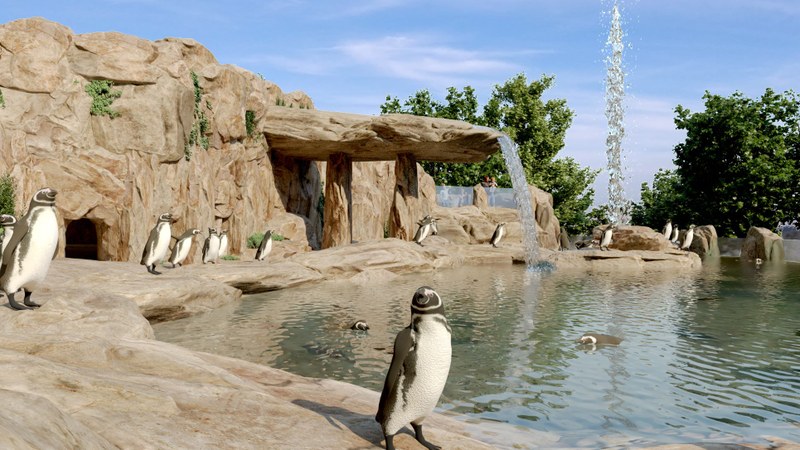
The pavilion occupies one of the busiest areas of the zoo – a location visited by virtually every guest. It has been designed to house 15 to 50 African penguins in surroundings that closely resemble their natural habitat. The centrepiece of the exhibit will be a large outdoor pool connected to a naturalistic open-air enclosure. Visitors will be able to walk around part of the pool and watch the penguins swimming underwater through large panoramic viewing windows. The pool will also feature a small island with a water geyser.

The visitor route will lead into an underwater cave, where guests will gain a unique perspective on the penguins’ underwater movements. The cave will also feature a large viewing window into an adjacent aquarium filled with fish. After leaving the cave, visitors will ascend a double staircase to a viewing platform on its roof, overlooking both the pool and the outdoor enclosure. The landscaped habitat will include rocky terrain, sandy beaches around the pool and a flowing waterfall. Throughout the exhibit, penguins will remain in close visual contact with visitors, separated only by railings and glass panels that allow detailed observation.
The pavilion will also include an interactive educational zone highlighting the environmental challenges facing African penguins in their native habitats. The species is the only penguin that breeds along the coast of southern Africa and has been listed as Endangered on the International Union for Conservation of Nature (IUCN) Red List since November 2013.

The project also includes a dedicated technical support building, housing the pool water treatment technology, indoor penguin facilities, and spaces for zoological and technical operations.
Construction began in autumn 2025. Current works focus on the reinforced concrete structures of the technical building and the underwater cave, including the ceiling above the first floor. The next phase will involve construction of the penguin pools. Utility connections are being installed continuously, together with a drainage system for rainwater and pool water, which includes a trenchless crossing beneath the zoo’s main access road.
