
Air Quality in Ostrava Remains in Excellent Condition
These results follow the record-setting year before last—while not surpassed, the values stayed broadly comparable.
The favorable outcome was influenced by more suitable meteorological conditions during autumn and winter: a long and warm autumn, a low occurrence of temperature inversions, no smog alerts, and fewer periods of extremely low winter temperatures. Other key contributing factors include the ongoing replacement of outdated heating boilers, a decline in primary metallurgical production, and modernization within industrial facilities.
“The year 2025 saw no smog situations declared for PM10 particulate matter, with measured values at all monitoring stations of the health institute decreasing again year-on-year. Regarding exceedances of the daily PM10 limit across Ostrava, the number of such cases ranged between 12 and 28 across the five stations, remaining within the permitted annual tolerance of 35 exceedance days,” said Lucie Hellebrandová, Head of the Centre of Hygienic Laboratories at the institute.
PM2.5 levels also remained below the annual limit of 20 μg/m³ at all stations, ranging between 14 and 18 μg/m³. “Average benzo(a)pyrene levels decreased year-on-year in Radvanice to a historic low of 1.39 ng/m³. In Poruba, they remained unchanged at 0.75 ng/m³ compared to 2024. A slight increase was recorded in Hrušov, Mariánské Hory, and Radvanice OZO,” added Hellebrandová.
“Over the past ten years, Ostrava has seen truly significant improvements in air quality. Nevertheless, further measures are still ahead of us to ensure continued progress. The most notable improvements have been observed in Slezská Ostrava and Radvanice. We can now state that Ostrava is comparable to other cities, dispelling the myth that it has the worst air quality. In addition to industry and household heating, transport is also a major contributor to air pollution. That is why, in cooperation with the health institute, we relocated a monitoring station from Poruba—where reduced traffic impact was confirmed following the completion of the Prodloužená Rudná road. Since January this year, measurements have been conducted in the Ostrava-Jih district near the busy intersection of Horní and Plzeňská streets,” said Deputy Mayor for the Environment Aleš Boháč.
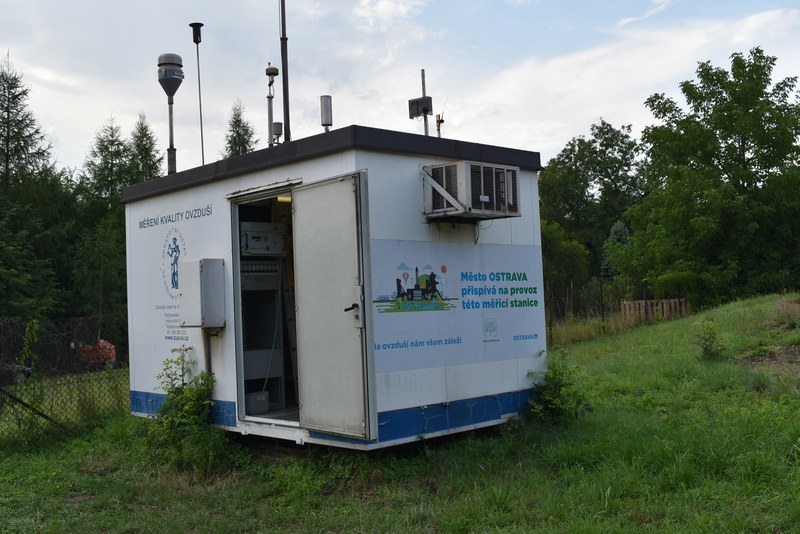
In 2025, measurements were carried out at stations in Mariánské Hory, Hrušov, Poruba, Radvanice, and Radvanice OZO. The results, along with collected samples, are compared against valid air quality limits set out in Annex No. 1 of the Air Protection Act (No. 201/2012 Coll., as amended).
Professionally supervised air quality monitoring and evaluation have been conducted in Ostrava since 1985. The city of Ostrava has long supported the operation of local monitoring stations, enabling experts to assess long-term trends.
Long-term monitoring includes SO₂, NO, NO₂, NOx, O₃, CO, PM10, PM2.5, and, depending on the location, meteorological parameters. Monthly sampling is also carried out for selected heavy metals (As, Cd, Mn, Ni, Pb), polycyclic aromatic hydrocarbons (PAHs, including benzo(a)pyrene), and volatile organic compounds (VOCs, including benzene). More information is available on the website of the Ostrava Health Institute.